Challenge: Educating and motivating Marin County residents in wildfire prevention and hazard mitigation
Working as a Seasonal Defensible Space Inspector protecting communities from devastating wildfire losses, I wanted to understand the technical subject matter deeply enough to communicate it effectively to residents. Since program success depends on residents taking action on their own properties, I enrolled in fire science courses at City College San Francisco and Mission College to understand fire behavior, weather, fuels and topography. This technical foundation helped me recognize where UX methodology could address communication challenges. Residents needed to understand the “why” behind recommendations to buy into both the problem and the solution, then feel motivated enough to do the work themselves.
Marin County Fire Department and Marin Wildfire Prevention Authority (MWPA): MWPA operates as a joint powers authority providing funding and coordination for wildfire prevention, including the defensible space inspection program, in Marin County
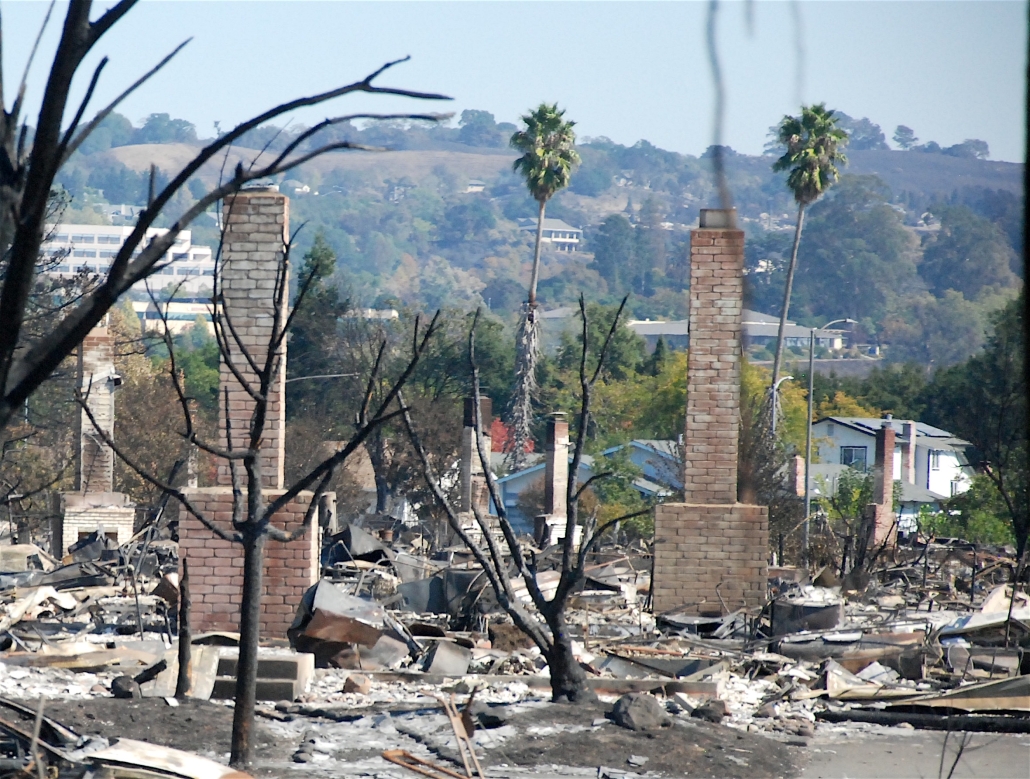
The Tubbs Fire, Santa Rosa, October 2017: California’s increasing wildfire frequency and intensity emphasize the need for effective prevention programs and community engagement strategies (Army National Guard photo by Capt. Will Martin/Released)
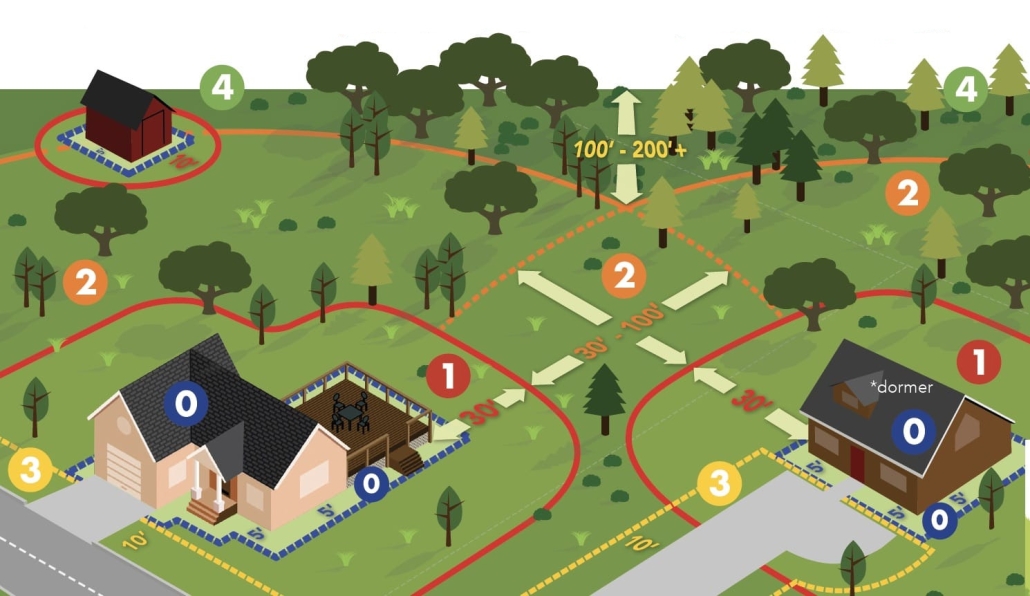
Defensible Space Strategy diagram: – Illustrates the five defensible space zones (0-4) around structures designed to reduce wildfire risk. In Marin County’s dense residential areas where ideal 100-foot clearances are often impossible, effective communication becomes critical for prioritizing the most important 0-30 foot zones that residents can actually implement
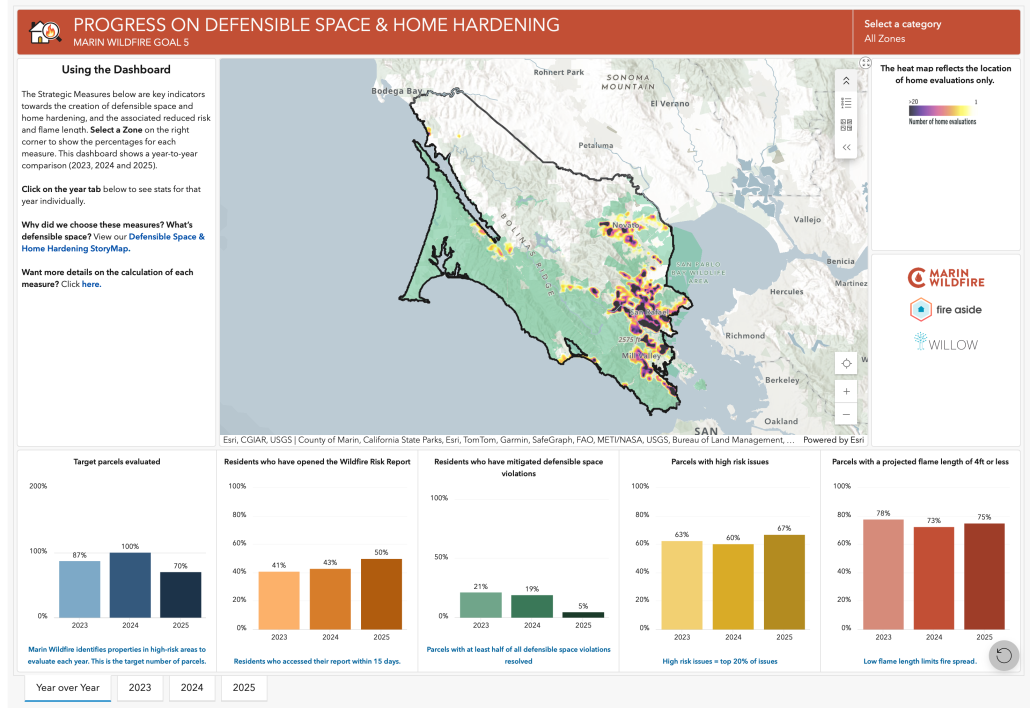
MWPA Progress Dashboard: Shows data visualization tracking defensible space program effectiveness across Marin County, demonstrating how systematic data collection from field inspections enables evidence-based program improvements and resident engagement measurement
Challenge & Research
Ongoing User Experience Challenges
- Insurance anxiety: Residents fear inspections will trigger policy cancellations
- Motivation decay: Engagement declines predictably as time passes since major fires
- Technical complexity: Residents struggle to understand fire science concepts and prioritize multiple recommendations
- Emotional resistance: Attachment to landscaping and budget constraints prevent action
Operational Pain Points
- Lack of systematic approach to resident follow-up required every response to be written from scratch, causing slower response times
- Responses varied widely in quality and completeness without consistent framework
- Limited team capacity for managing resident progress communications
Research Methods
- In-depth resident interviews mapping decision-making patterns and emotional barriers
- Observation of resident engagement patterns noting how public attention to wildfire danger influenced resident motivation and follow-through
- Stakeholder interviews with inspection team identifying operational constraints
Key Insight: Resident willingness to engage with mitigation recommendations varies significantly based on recent wildfire activity and media attention. These ongoing psychological and practical barriers require systematic, empathetic communication strategies rather than one-time solutions.
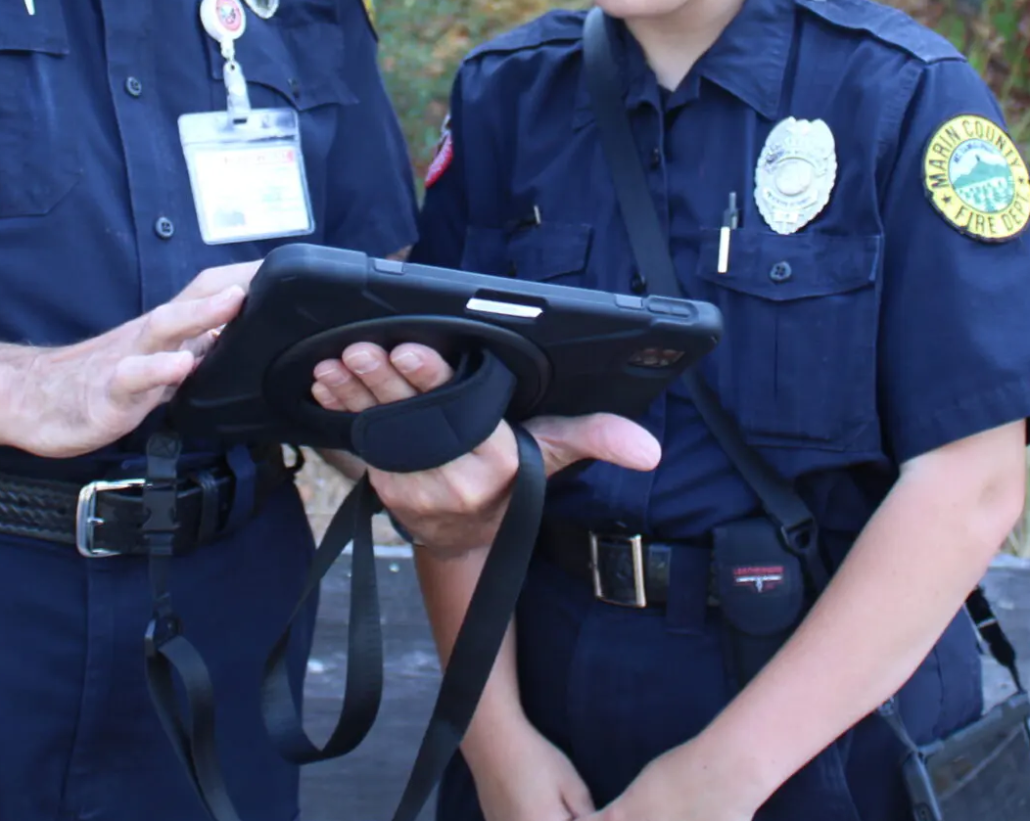
Defensible space inspectors with tablet technology: Field team members conducting property assessments using digital tools to document wildfire vulnerabilities and generate comprehensive risk reports for residents
Solution
Service Design Innovation
Developed a systematic response framework with a spreadsheet interface, allowing inspectors to craft professional and consistent communications when addressing resident updates on vulnerability mitigation efforts. This system improved response consistency and efficiency, and enabled more team members to perform this role.
User-Centered Communication Approach
I designed a systematic resident engagement process that began by assessing each resident’s existing knowledge and motivation level, then tailored my approach accordingly. For residents who wanted hands-on engagement, I offered personalized property walk-throughs to explain vulnerabilities in context and demonstrate fire risks in real time. For those who preferred minimal interaction, I conducted the inspection independently and returned with a focused presentation of key findings.
Regardless of format, I prioritized findings by urgency and accessibility, pairing critical risks with achievable solutions that would have the greatest impact on preparedness.
A critical component of every interaction was acknowledging existing positive features. This positive framing served multiple strategic purposes: it disarmed defensive reactions, reframed the conversation as educational rather than punitive, and helped residents prioritize maintenance. For example, I would acknowledge that asphalt roofs provide good fire resistance, while noting that this protection diminishes when leaves accumulate and create ignition points.
This user-centered approach improved resident receptivity and follow-through, transforming compliance-focused inspections into collaborative planning sessions.
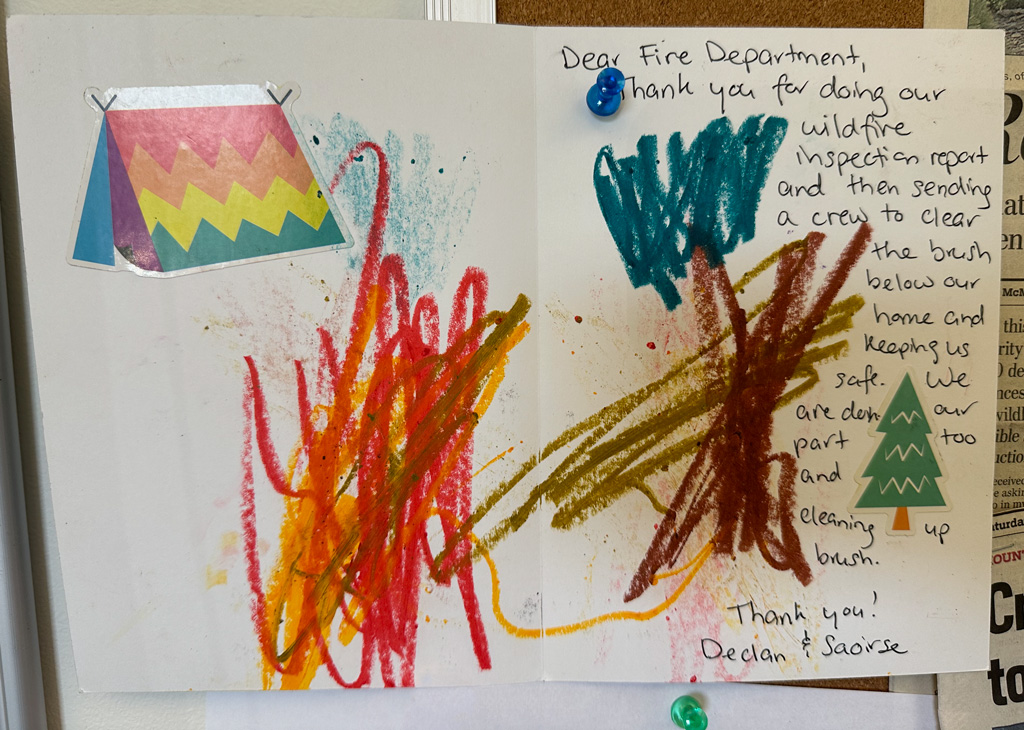
UX Impact at Scale: This child’s thank-you card to the Fire Department resulted from an inspection where I applied user-centered design principles. By listening to residents’ specific concerns and addressing their real needs, individual UX interactions create positive impressions that reflect on the entire organization.
Results
Program Performance During Tenure
During my service (summer 2023, spring 2024), MWPA evaluated 30,367 parcels in 2024 with 43% of residents opening their Wildfire Risk Report—a key engagement metric directly impacted by effective communication. The program showed measurable improvements with increased resolved violations and better risk reduction outcomes between 2023-2024.
My Communication System Impact
- Expanded team capacity for handling resident follow-up communications through systematic framework that multiple inspectors could use
- Standardized response quality across the team when residents submitted mitigation progress updates
- Reduced response times when residents submitted updates about addressed vulnerabilities
- Created scalable solution that improved operational efficiency for this specific communication workflow
Key Takeaway
This project demonstrates the critical need for user-centered design in wildfire prevention technology and communications. By identifying that resident motivation follows predictable patterns and that positive framing disarms defensive reactions, I created systematic solutions that improved both operational efficiency and community compliance. My combination of fire science education and UX methodology revealed unique insights into how residents process risk information and make mitigation decisions. This specialized understanding of wildfire prevention user behavior, operational constraints, and communication challenges positions me to design more effective prevention technologies, resident-facing tools, and engagement strategies that can scale across fire-prone communities.